
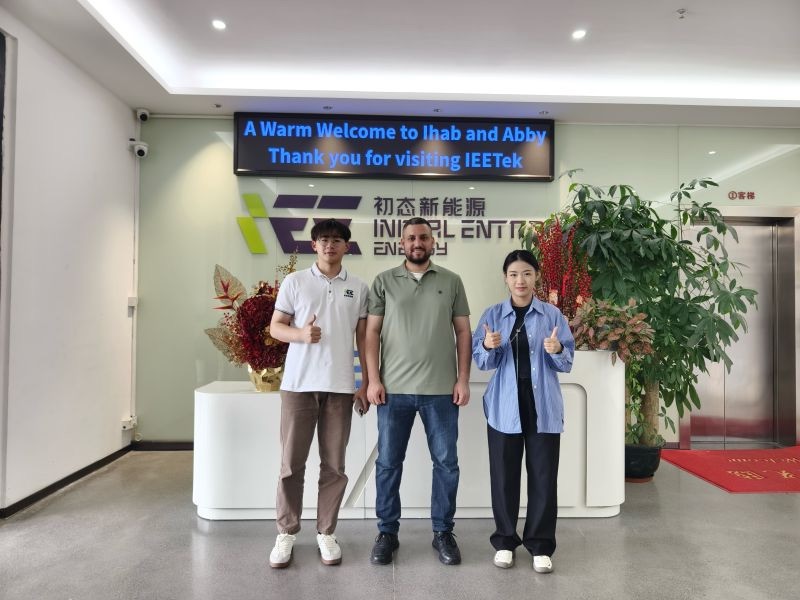
When Aupeak accompanied an overseas buyer to visit an energy-storage supplier in China, the useful work went beyond viewing finished products. The visit created a chance to connect the buyer's use case with the battery system, inverter, solar input, interfaces, documents and after-sales process before moving toward a sample or order.
Define the use case before comparing power stations
Capacity and rated output are useful filters, but they do not define whether a product fits the buyer. Start with the loads it must power, the required runtime, charging sources, operating environment, destination market and the people who will use it. A camping unit, a mobile-work product and a household backup system create different priorities.
List the highest continuous load, any startup surge, sensitive electronics, expected daily energy use and acceptable recharge time. Then check whether the proposed model supports that pattern without relying on optimistic brochure examples.
- Target appliances, continuous load and startup behaviour.
- Required runtime and usable energy under representative conditions.
- AC grid, vehicle and solar charging scenarios.
- Indoor, outdoor, mobile or emergency-backup use.
- Destination voltage, frequency, plug type, language and labelling.
- Weight, handle, wheels and storage expectations for the intended user.
Give every supplier the same load profile and destination requirements. Otherwise, similar-looking quotations may describe materially different systems.
Establish what the supplier actually designs and controls
A showroom can contain complete portable power stations, home-storage batteries, inverters, solar panels and EV-charging equipment. That range is useful, but the buyer still needs to understand which products are designed, assembled and tested by the visited company and which are sourced from partner factories.
Ask who owns the electrical and mechanical design, battery-management firmware, inverter control, application software and tooling. Confirm where the exact model would be produced and whether the supplier can trace engineering changes across hardware, firmware and the approved bill of materials.
- Legal manufacturer and production address for the quoted model.
- In-house engineering responsibilities and outsourced modules.
- Ownership of moulds, firmware, application software and custom branding files.
- Current production status: concept, engineering sample, pilot or mass production.
- Change-control process for cells, electronics and other safety-relevant parts.
Review the complete product architecture
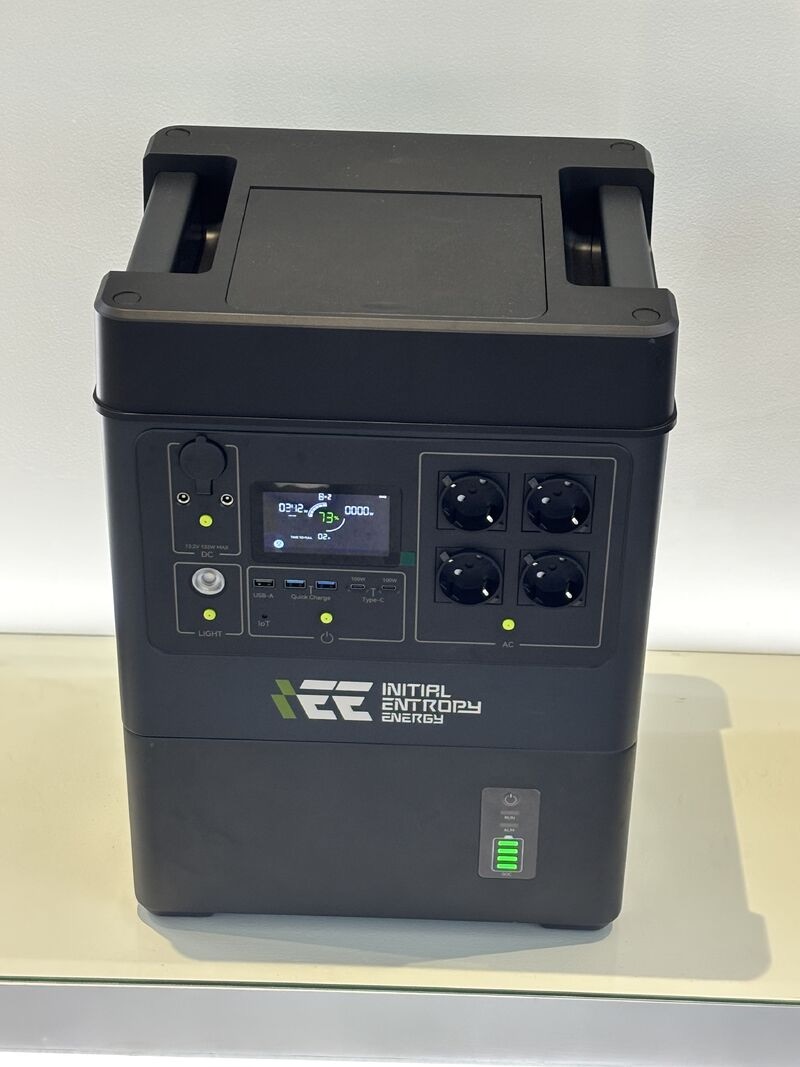
Inspect the unit as a system. The battery pack, BMS, inverter, charger, display, ports, cooling, enclosure and firmware must work together. A high nominal specification is not useful if the output arrangement, charging limits or thermal behaviour does not match the buyer's application.
During a visit, handle the product and move through its normal operating sequence. Review access to ports, screen information, physical stability, fan behaviour, controls and how errors are communicated. Record the exact sample model and firmware version so later test results remain traceable.
- Battery chemistry, cell format, pack configuration and stated usable capacity.
- Continuous and peak AC output, waveform and destination-specific sockets.
- USB-A, USB-C, DC and vehicle outputs with their supported protocols and limits.
- Grid, solar and vehicle input ranges and whether simultaneous charging is supported.
- Display accuracy, alarms, error codes, standby consumption and firmware updates.
- Cooling path, fan control, enclosure protection and mechanical handling.
Ask for evidence behind the battery and BMS claims
Battery quality cannot be judged from the enclosure. Request the cell manufacturer and model, purchasing controls, incoming inspection, matching method and pack traceability. If the supplier offers several cell options, every commercial comparison should state which one is included.
The BMS should be discussed as a safety and control layer, not only a feature list. Ask how the system responds to overcharge, over-discharge, overcurrent, short circuit and temperature limits; how sensors are arranged; and how faults are recorded. The supplier should be able to connect those claims to design records and model-specific test evidence.
- Cell specification and traceability to the finished product serial number.
- Capacity and internal-resistance grading before pack assembly.
- Protection thresholds, sensor locations and fault-recovery behaviour.
- Pack balancing strategy and state-of-charge estimation.
- Cycle-life test conditions rather than a cycle number without context.
- Repair policy for batteries, electronics and other serviceable modules.
A supplier presentation explains the design intent. Test reports, production records and controlled samples show whether that intent is repeatable.
Test the power station and solar panel as one system
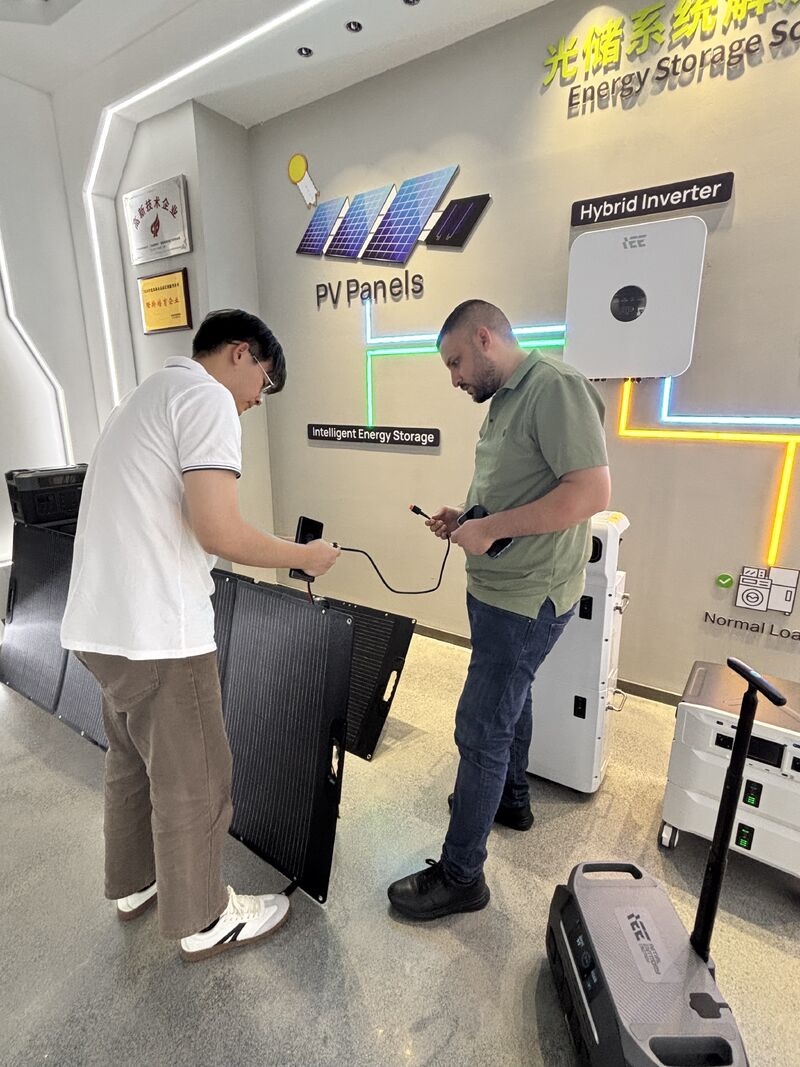
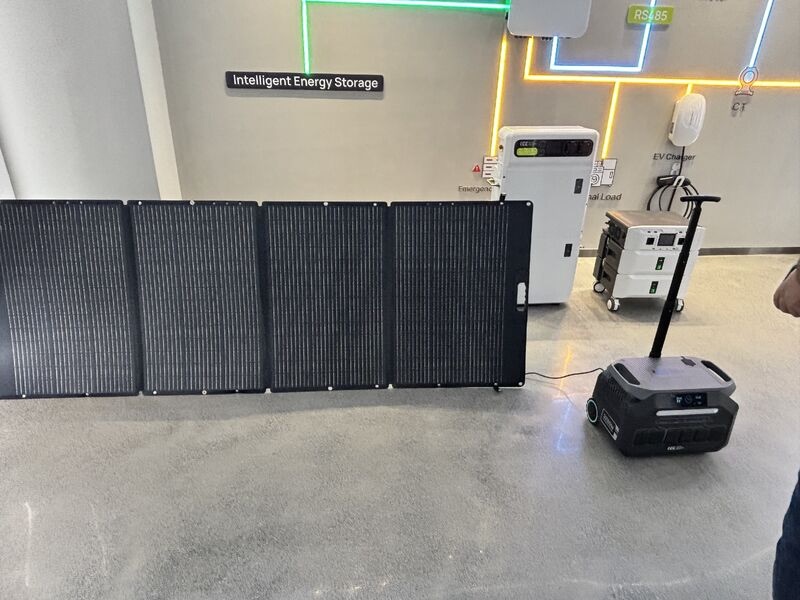
A foldable solar panel and a portable power station may each look suitable while still being poorly matched. Confirm connector type, polarity, open-circuit voltage, operating voltage, current limit and the power station's solar-input range. Check whether adapters are standard, included and keyed against incorrect connection.
Demonstrate the real charging sequence and record the conditions. Indoor lighting cannot validate outdoor solar performance, but it can confirm connection logic, user interface and basic compatibility. A later sample test should measure charging under controlled, representative sunlight and temperature conditions.
- Panel rated power and the test conditions behind that rating.
- Power-station photovoltaic input voltage and current window.
- MPPT behaviour, input limits and expected recharge-time assumptions.
- Cable length, connector durability, adapters and packing protection.
- Folded size, deployed stability, weather exposure and user instructions.
Build a model-specific compliance and transport file
Requirements depend on the product architecture, battery energy, destination and transport mode. Ask the supplier to map every document to the exact cell, battery pack and finished model being quoted. A certificate or report for a related model is not automatically evidence for the product you will import.
For lithium batteries, transport documentation is a separate control from product-market compliance. The UN Manual of Tests and Criteria contains the section 38.3 lithium-battery tests, and manufacturers and subsequent distributors are expected to make the specified test summary available. Shipping arrangements still need confirmation with a qualified dangerous-goods forwarder for the actual configuration and route.
- Model-specific test reports, certificates or declarations required by the destination market.
- Cell and battery identification that matches the bill of materials and transport documents.
- UN 38.3 test summary with manufacturer, laboratory, report and model details.
- Safety data and packaging information requested by the selected carrier or forwarder.
- Manuals, warnings, rating labels, recycling marks and local-language requirements.
- Document validity after hardware, cell, firmware or supplier changes.
This is a sourcing checklist, not a compliance determination. Confirm the exact product and market requirements with qualified laboratories, compliance specialists and logistics providers before sale or shipment.
Verify how production quality is controlled
Move from the sample to the production process. Ask how cells, boards, inverters, chargers and enclosures are inspected when they arrive; which parameters are checked during assembly; and what end-of-line tests every finished unit receives. Review calibration, test records and failure handling rather than accepting a generic quality-flow diagram.
A pilot order is useful for confirming that the supplier can reproduce the approved sample. Define the inspection plan before mass production, including identity checks, functional load tests, charging, ports, display, noise, accessories, labels, packaging and any agreed sample-based reliability checks.
- Incoming inspection and approved-supplier controls for critical parts.
- Cell matching, pack assembly, insulation and electrical-safety checkpoints.
- Firmware loading, serial-number traceability and configuration control.
- End-of-line charge, discharge, output, protection and communication tests.
- Ageing or burn-in conditions and how failures are investigated.
- Export-carton protection, dangerous-goods labels and accessory completeness.
Leave the visit with a controlled next step
A positive visit should end with more than a group photo. Record open technical questions, missing documents, agreed sample configuration, quotation assumptions and the person responsible for each answer. Separate confirmed facts from items that still depend on engineering or laboratory review.
Before a production commitment, move through a written sample and verification plan. That may include document review, functional testing under representative loads, solar-input testing, a pilot order, pre-shipment inspection and confirmation of the dangerous-goods shipping route.
- Freeze the exact model, cell option, plugs, ports, firmware and accessories.
- Request a complete technical and compliance document index.
- Define sample tests, pass criteria and who will review the results.
- Confirm MOQ, lead time, warranty, spare parts and failure-analysis process.
- Keep a backup supplier until the preferred option passes the required checks.
We help overseas buyers prepare supplier visits, ask model-specific questions, coordinate samples and turn on-site findings into a comparable sourcing record.